
Houseplants can be surprisingly tricky to move. A sofa will cope with being wrapped and loaded, but a fern, orchid or trailing pothos can react badly to cold air, broken stems, dry compost or a sudden change in light.
The good news is that most houseplants can survive a house move with sensible preparation. This guide explains what to do before moving day, how to pack plants safely, which plants usually travel best and how to help them settle in afterwards.
Start preparing your plants before moving day
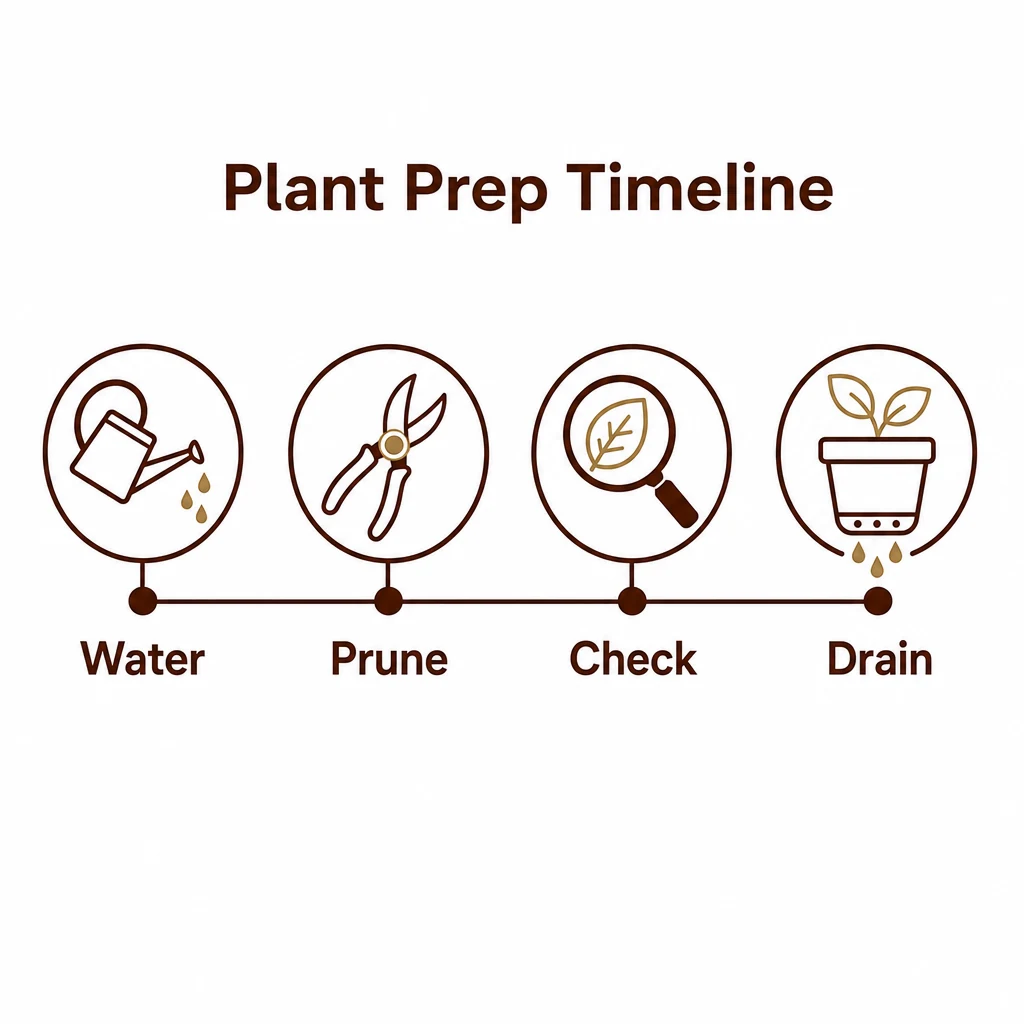
Begin by checking every plant a week or two before the move. Remove dead leaves, trim damaged stems and look for pests such as aphids, fungus gnats or scale. Moving an unhealthy plant can make problems worse, especially if it is placed close to other plants in a warm vehicle or new room.
Watering needs a little judgement. Plants should not be bone dry, because dry compost can shrink away from the pot and roots may suffer. They should not be soaked either, because heavy wet pots are harder to lift and water can leak into boxes. For most plants, watering a day or two before the move is enough. Succulents and cacti may not need watering at all beforehand.
If a plant is in a fragile decorative pot, consider moving it into a plastic nursery pot temporarily. You can wrap and transport the decorative pot separately. This reduces the chance of cracked ceramics and makes the plant lighter to handle.
It is also worth mentioning valuable, large or delicate plants during your removals survey. A good survey is not just about furniture. It helps your removals team understand access, packing needs and anything that needs special care. Crutch Bros has a helpful guide on preparing for a home removals survey if you want to make sure nothing important is missed.
Pack houseplants so leaves, stems and pots are protected
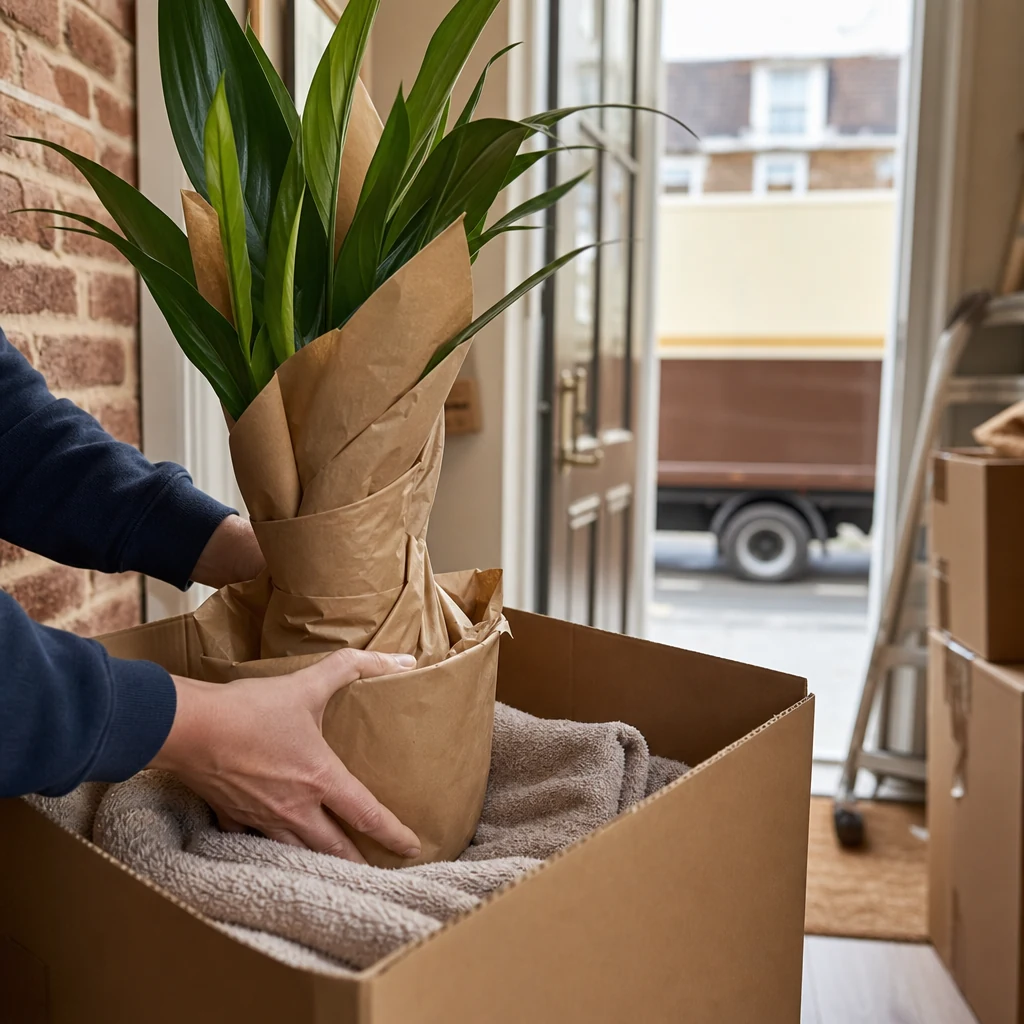
Small and medium plants are usually easiest to move in open topped boxes. Line the base with a bag, tray or absorbent material in case any moisture escapes. Place heavier pots at the bottom and use scrunched paper, cloths or towels to stop them sliding around.
For leafy plants, loosely gather stems together before placing them in a box. Do not tie them tightly, as this can bruise stems and leaves. A paper sleeve, similar to the way a florist wraps a bouquet, can protect upright foliage without trapping too much moisture.
Avoid sealing plants inside plastic bags for long periods. Plastic can hold condensation against leaves, especially if the weather is warm or the plant has just been watered. Paper, card and breathable wrapping are usually safer for short journeys.
Trailing plants need extra attention. Lift the vines gently and coil them into the pot or box rather than allowing them to hang loose. If the stems are very long, support them with soft paper or cloth so they do not snap when the box is moved.
Label plant boxes clearly and keep them upright. You can also write a simple note such as fragile plants or keep upright so anyone helping with the move knows how to handle them. For broader packing advice around the rest of the home, a room by room packing guide can help you keep plant care as part of a wider plan.
Know which plants travel well and which need extra care
Some houseplants are naturally more forgiving during a move. Snake plants, spider plants, pothos, rubber plants, jade plants and many succulents usually cope well with short periods of disruption. They are fairly tolerant of changes in light, temperature and watering routine.
More sensitive plants may need extra care. Ferns can wilt if they dry out. Orchids dislike rough handling and cold draughts. Fiddle leaf figs can drop leaves after a change in position. Calatheas and prayer plants are sensitive to temperature changes and inconsistent moisture.
This does not mean delicate plants cannot be moved. It simply means they should be packed last, kept stable and unpacked early. If you have a plant that is already struggling, think carefully before moving it with the rest of your belongings. Taking cuttings can be a sensible backup, especially for trailing plants that root easily in water.
Very large plants are a separate challenge. A tall plant in a heavy pot may need two people to lift it safely. It may also need space around it so leaves are not pressed against boxes or furniture. If the plant is too large to box, wrap the pot, protect the soil surface and support the main stem if needed.
What to do with plants on moving day
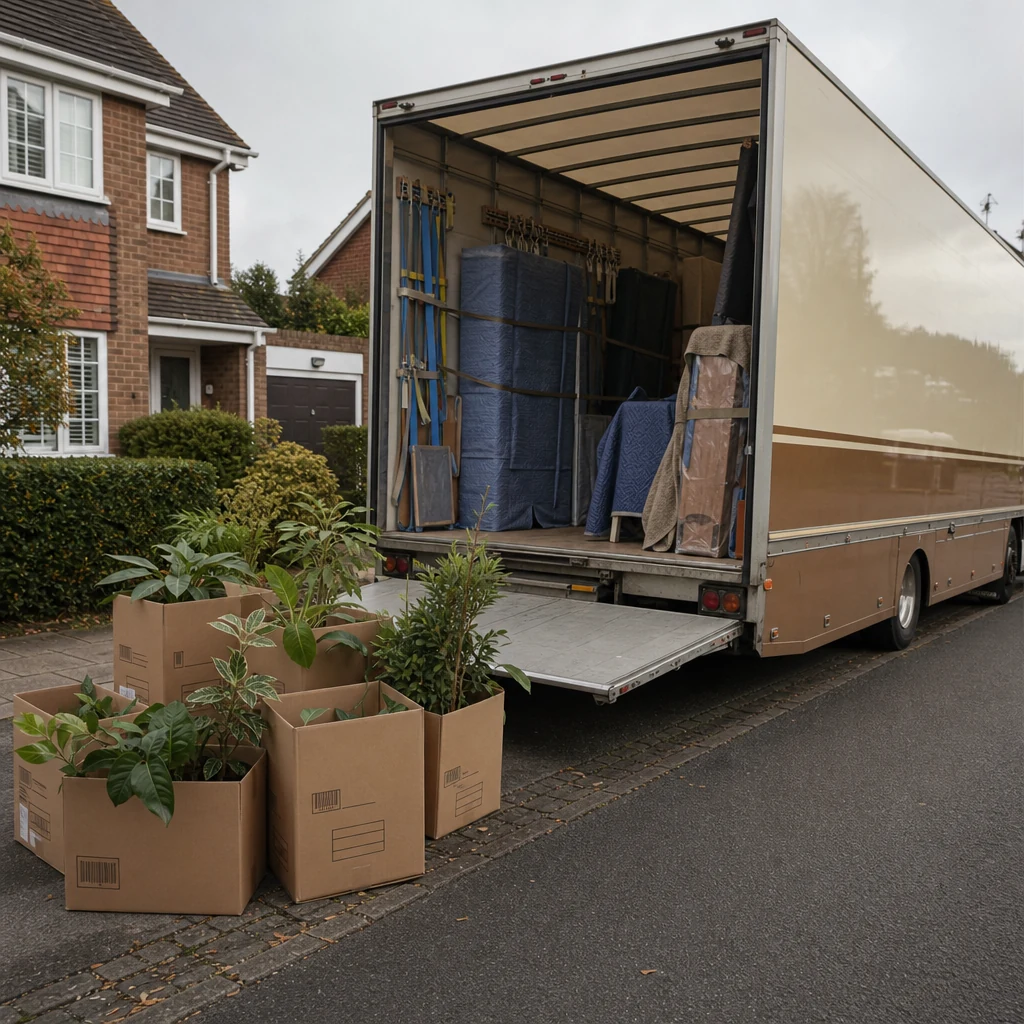
On moving day, keep plants away from doors that will be open for long periods. Sudden cold air can shock tropical plants, while direct heat can dry leaves quickly. The aim is to keep them in a steady environment for as long as possible.
Pack plants into the vehicle near the end if practical, especially if the journey is short. This reduces the time they spend away from normal indoor conditions. They should be placed where they cannot be crushed by boxes or furniture and where pots will not tip during movement.
Do not leave plants in a parked vehicle for longer than necessary. Temperatures inside vehicles can change quickly, even when the weather outside feels mild. If there is a delay between leaving one property and entering the next, plants are often better kept with you if space allows.
If you are using a removals company, explain which plants are fragile and which boxes must stay upright. For a planned domestic move, professional support can make the day feel far more controlled. If you are arranging a local move, Crutch Bros offers home removals support for customers who want careful planning from survey through to moving day.
Help plants settle into the new home
Once you arrive, unpack plants as soon as you reasonably can. Remove any paper sleeves or protective wrapping so leaves can breathe. Check for broken stems, spilled compost and signs of wilting.
Try to place each plant somewhere similar to its old position at first. A plant that was used to bright indirect light may struggle if it is suddenly placed in deep shade or full sun. Once it has adjusted, you can move it gradually if you want a different layout.
Resist the urge to repot everything immediately. Moving is already a shock, and repotting adds more root disturbance. Unless a pot has broken or the plant is clearly unstable, give it time to recover before changing containers.
Water according to the plant rather than the calendar. Some plants may dry out during the move, while others may still be damp from being watered beforehand. Check the compost with your finger before watering. Yellowing, drooping or leaf drop in the first week does not always mean disaster. Many plants react to a new environment and recover once light, warmth and watering settle.
If you want the move to be kinder to both plants and the wider household, it can also help to think about packing materials, reuse and waste. The Crutch Bros guide to green moving practices has useful ideas for a more considered move.
When it may be better not to move a plant
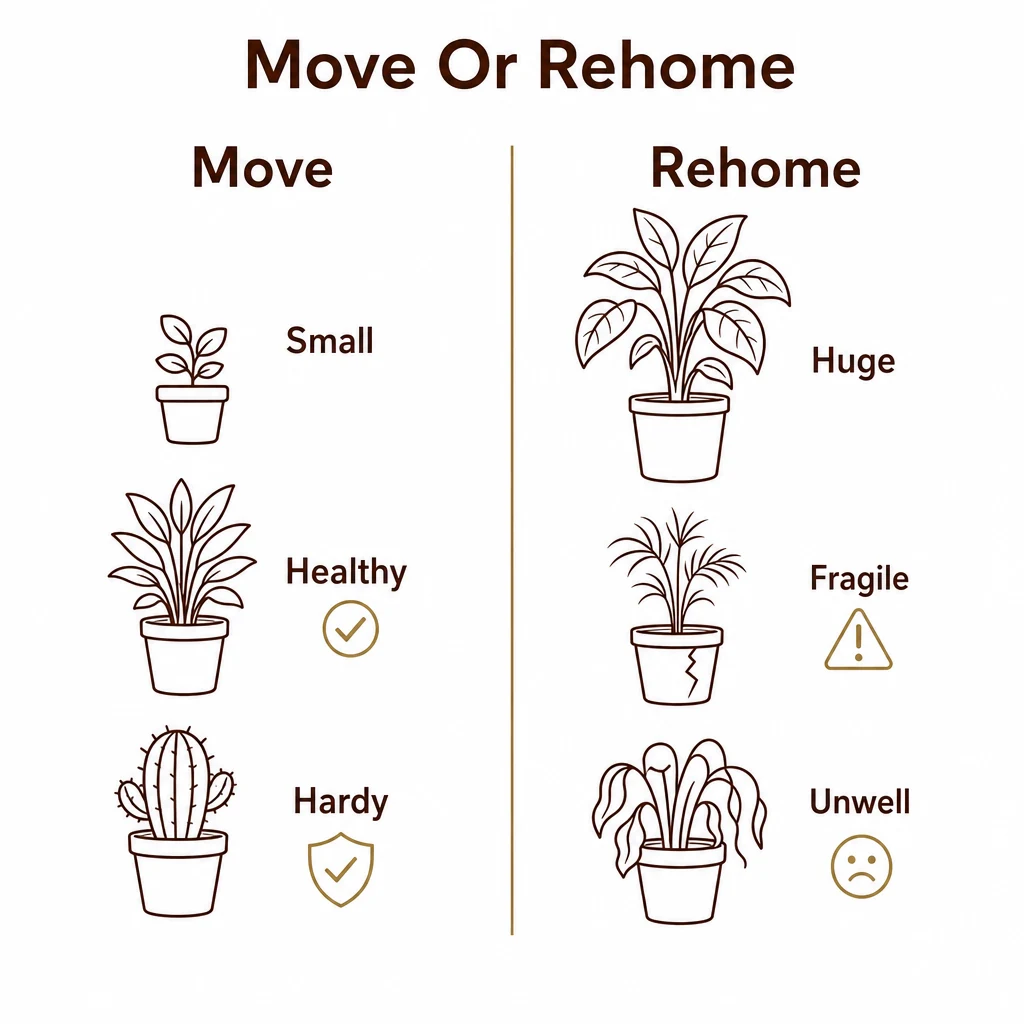
There are times when moving a plant may not be the best option. If a plant is badly diseased, heavily infested or too large to move safely, it may be better to take cuttings, gift it to someone nearby or dispose of it responsibly.
Outdoor potted plants can also be difficult if they are extremely heavy, waterlogged or full of soil. Check whether they are practical to lift and whether the new property has a suitable place for them. The same applies to planters, hanging baskets and greenhouse plants.
If you are reducing what you take with you, decide early which plants are coming. Last minute decisions often lead to rushed packing, damaged pots and plants being left in unsuitable places. Treat plants as part of your main moving plan, not as an afterthought.
- Check plants for pests, dead leaves and damage before packing them.
- Water lightly before the move, but avoid travelling with very wet compost.
- Use open boxes, breathable wrapping and clear labels to protect pots and foliage.
- Keep plants upright, away from temperature extremes and unpack them early.
- Give plants time to settle before repotting or moving them into very different light.
Frequently asked questions
Can removal companies move houseplants?
Many removal companies can move houseplants as part of a household move, but it is best to mention them during the survey or booking process. Large, fragile or valuable plants may need extra planning so they can be handled safely.
Should I water plants before moving house?
Usually, yes, but lightly. Water most houseplants a day or two before the move so the compost is not completely dry. Avoid soaking them, as wet pots are heavier and more likely to leak.
How do I stop plant pots breaking during a move?
Wrap fragile pots separately where possible, cushion pots inside boxes and fill gaps so they cannot slide. If a decorative pot is valuable, move the plant into a plastic pot temporarily and pack the decorative pot like other breakable items.
Why has my plant dropped leaves after moving?
Leaf drop can happen after a change in light, temperature or routine. Check watering, keep the plant away from draughts and avoid repotting straight away. Many plants recover once they adjust to the new home.
Planning a careful move?
If you are preparing for a home move and want calm, practical support from survey to moving day, Crutch Bros can help you plan the details properly.