The first evening in a new home feels easier when the kitchen boxes are in the kitchen and the bedding is easy to find. That organisation starts before the removals vehicle leaves your old address, with clear labels and a loading plan that supports a sensible unloading order.
Professional packing connects what goes into each box with where it needs to go next. Understanding that process helps you explain your priorities to your removal company, so the team can plan around the rooms, access and belongings that matter most to you.
Labels should explain where a box belongs
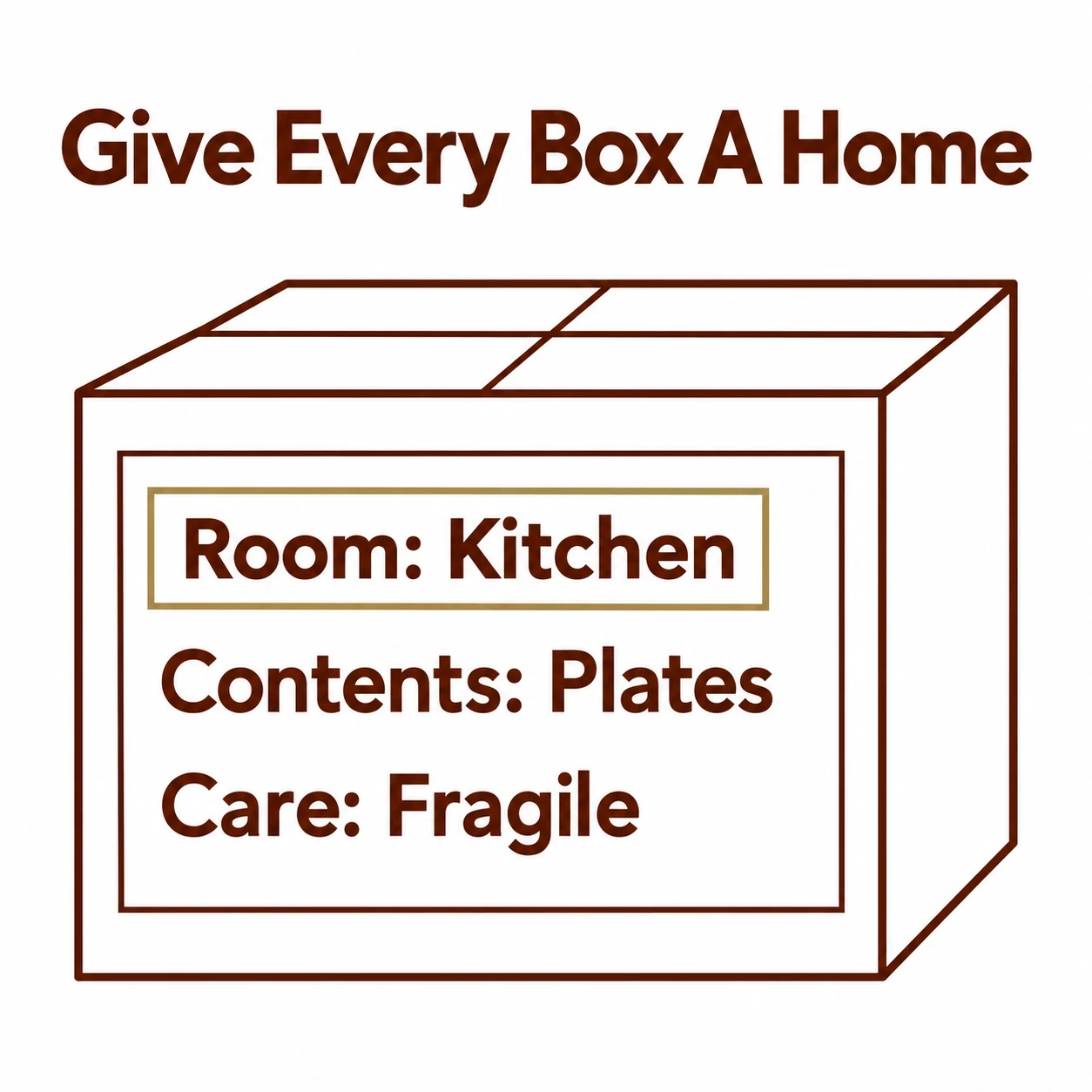
A useful box label answers two questions straight away: which room should receive it, and what does it broadly contain? A label such as Kitchen, everyday crockery gives the unloading team a destination and helps you decide which box to open first.
The destination should describe the new home, rather than simply repeat where items lived before. Books from a spare bedroom might be heading to a study. Without that distinction, a neatly packed box can still end up in the wrong room.
Consistent room names are particularly helpful where bedrooms look similar. Agreeing names such as Bedroom 2, beside bathroom gives everyone a shared reference. Temporary room signs, agreed in advance, can help match those names to the right doors.
Labels on more than one visible surface make boxes easier to identify when stacked. Broad descriptions are usually enough for everyday items, without displaying sensitive personal details. The aim is practical identification, not a complete account of everything inside each carton.
Professional packing makes the labels meaningful
Clear wording works best when the contents follow a logical grouping. Professional packers can keep items for the same destination together while choosing suitable materials and balancing the weight of each box. That helps you unpack a useful group of belongings rather than a mixture from unrelated rooms.
Protection still takes priority. A heavy object and a delicate item may belong in the same room but need separate packaging. Equally, a large collection may need several manageable boxes rather than one overloaded carton. Labels preserve the connection between those separate boxes.
Handling notes add another layer of information. Fragile or This way up can communicate particular care requirements, but neither replaces cushioning, suitable cartons or secure packing. The physical protection and the label need to work together.
When discussing a removal packing service, explain which belongings you expect to need soon after arrival. The team can advise how to group and identify them within the agreed service, including any items you will keep with you rather than send in the vehicle.
Loading order balances access with protection
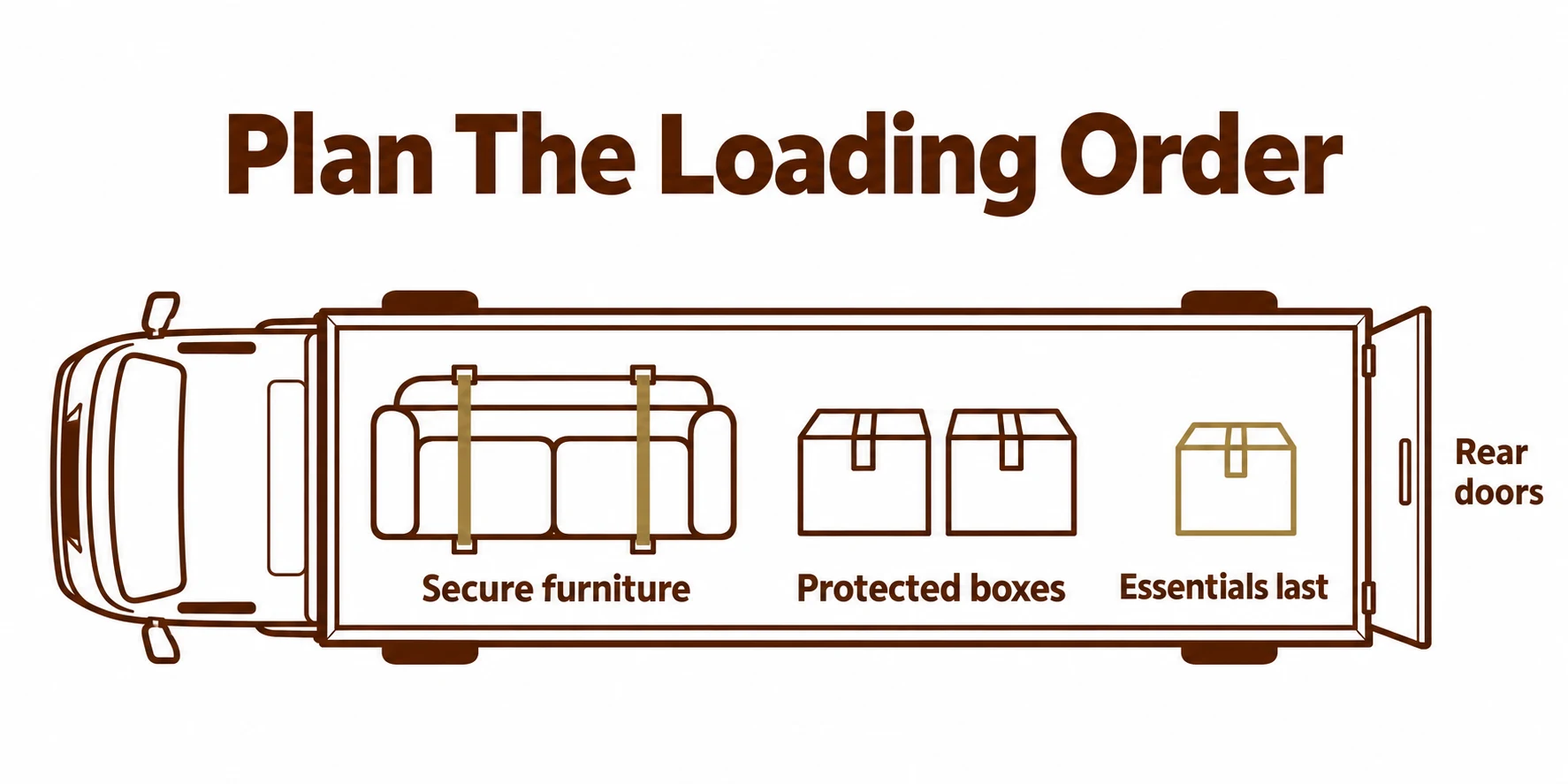
A removals vehicle is not simply filled in room order. The crew must consider weight distribution, stability, furniture dimensions and how to secure the load. Strong labels support that work because boxes remain identifiable even when they cannot travel beside everything else from the same room.
Heavier, robust items generally need a stable position, while lighter or delicate cartons need protection from crushing. Furniture and boxes are arranged to reduce movement during transport. This means an unpacking preference must fit within a safe loading plan, rather than override it.
Priority items can sometimes be positioned for earlier access, provided the crew knows about them before loading begins. Bedding, for example, may be useful early, but the best position depends on the rest of the load and the unloading arrangements.
The familiar idea that the last item loaded is always the first item needed is too simple for a complete house move. A better plan considers what can be unloaded safely, where it will go and which routes need to remain clear at the destination.
A short briefing helps the crew plan ahead
The most useful information often concerns differences between the two properties. A room becoming an office, furniture moving upstairs or a narrow doorway can all affect packing labels and delivery order. Sharing those details early gives the team a clearer picture of the move.
A home removals survey is a good opportunity to discuss room destinations, access and the scope of packing. It also helps establish whether anything needs separate handling or is not travelling to the new home.
Before packing starts, agree:
- The names the team will use for rooms at the destination.
- Which belongings are staying behind or going elsewhere.
- Any boxes you would like identified for early access.
- Whether unpacking or furniture assembly forms part of the booking.
Keep medication, important documents, keys and immediate personal essentials with you where appropriate. This avoids relying on access to the load during the journey. If plans change, tell the crew before the affected items are packed or loaded so the information stays consistent.
Room placement makes unpacking more manageable
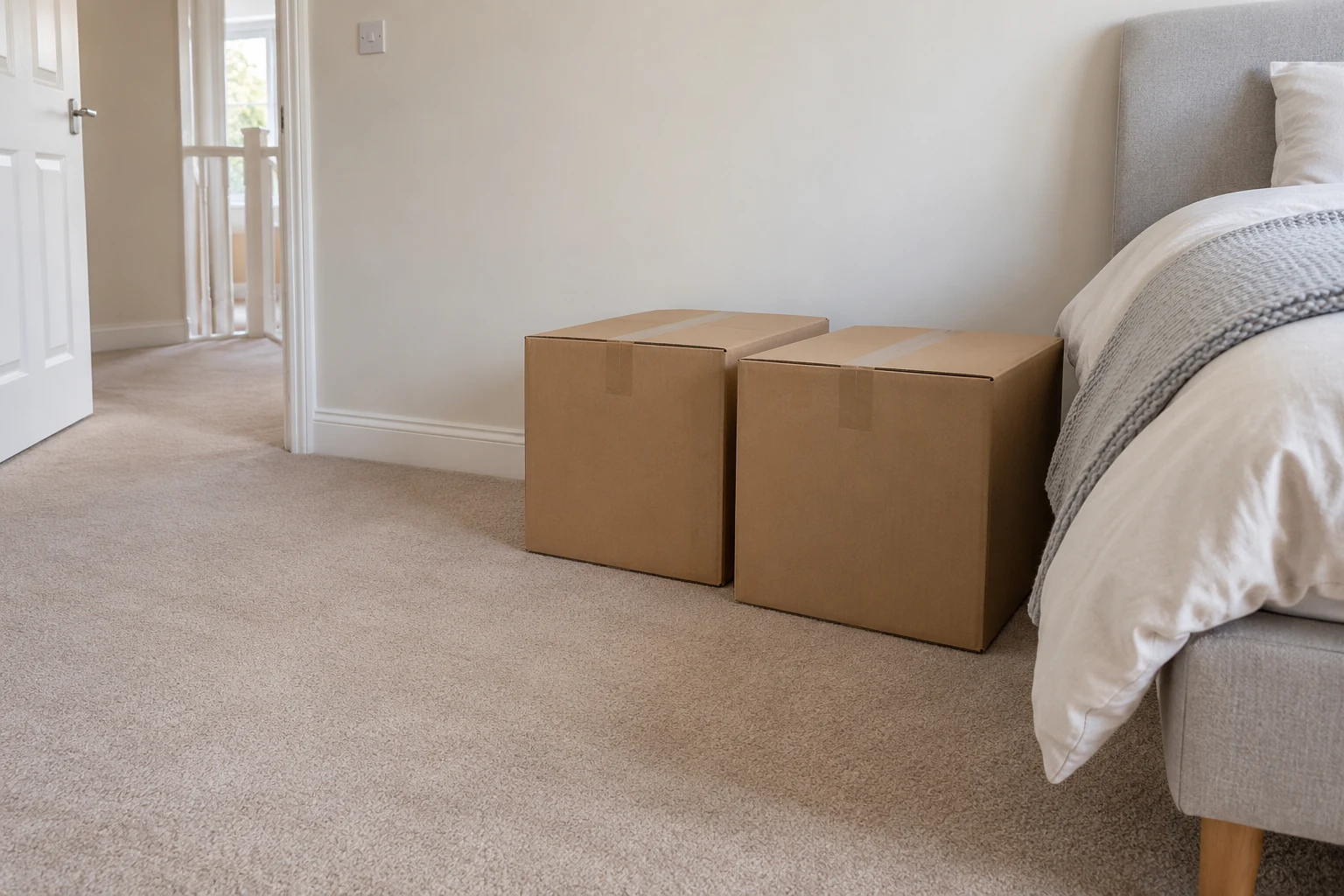
At the new home, labels turn the unloading plan into practical room placement. A quick confirmation of room names before unloading helps prevent assumptions, especially when several rooms could reasonably be called a study or spare bedroom.
Where space allows, boxes can be grouped in their destination rooms while leaving doors, walkways and furniture positions clear. Filling the centre of a room may make it harder to place a bed or wardrobe, so the crew needs to consider furniture and cartons together.
Having one person available to answer destination questions can keep decisions consistent. They do not need to direct every box, but they can resolve unclear labels or explain a change of plan before belongings are set down.
Once unloading is complete, useful labels let you choose your next task: bedding before ornaments, everyday crockery before occasional serving dishes. Unpacking does not have to happen all at once. Accurate placement gives you the freedom to settle the essential rooms first, without carrying boxes between floors or opening several cartons to find one item.
- Label boxes for their destination in the new home, with a useful contents description.
- Agree consistent room names and early access priorities before packing begins.
- Safe loading takes priority over a rigid room or unpacking order.
- Clear room placement reduces searching and unnecessary carrying after arrival.
Frequently asked questions
Will professional packers label every box?
Labelling should be agreed as part of the packing arrangements. Ask how destinations, contents and handling requirements will be recorded, and explain any room names or priorities you want the team to use.
Can boxes I pack myself use the same system?
Yes. Ask the removal company for its preferred labelling approach before you start. Matching destination names helps the crew place your boxes alongside professionally packed items. Make clear which boxes contain fragile belongings.
Does a packing service include unpacking?
Not automatically. Packing, unloading into rooms and unpacking are different tasks. Confirm what your booking includes and discuss any help you would like with removing contents, arranging belongings or taking away packing materials.
What if I change a room destination on moving day?
Tell the crew as early as possible. Agree how the affected boxes will be identified so everyone follows the same instruction, rather than relying on a verbal change that only one person has heard.
Plan for a more settled arrival
Talk to Crutch Bros about packing priorities and room placement for your move. Our domestic removals service can help you plan the journey from your current home to your next.